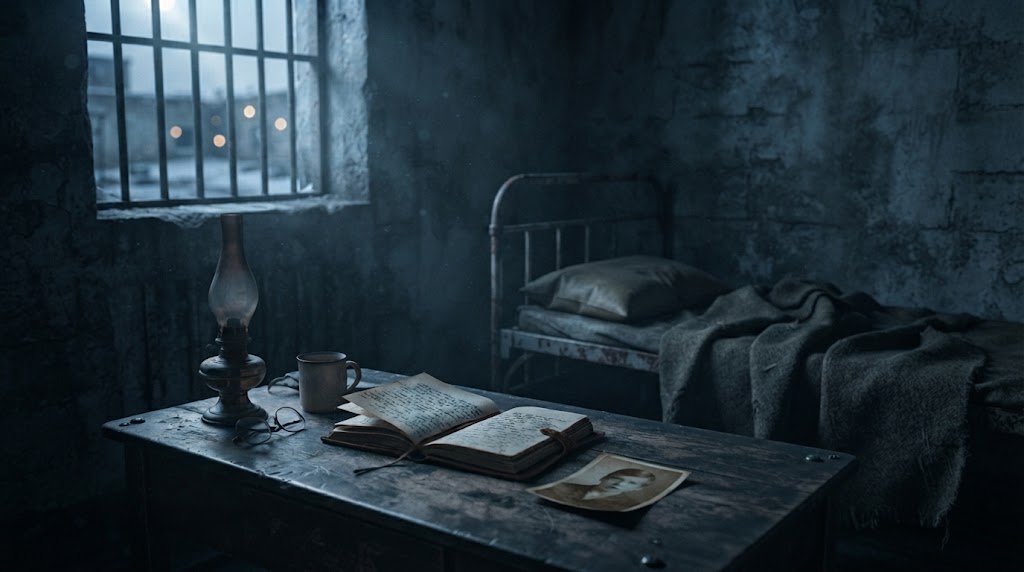
It gives you everything back except the moment itself.
You can remember the exact color the sky turned that evening. The sound of a door before it became a door you’d never walk through again. The weight of a hand that isn’t there anymore. Memory hands you all of it, generously, endlessly — and still, somehow, none of it is the thing you actually want.
What Memory Keeps, And What It Steals
We like to think of memory as a gift. Proof that something mattered, that it happened, that it was real. And it is that. But it’s also a kind of theft — because the more perfectly you remember a moment, the more clearly you feel how far away it’s gotten.
Photographs gather dust. Names slip, eventually, no matter how hard you hold onto them. Even the people we swear we’ll never forget become someone we have to work to remember — a face we reconstruct instead of simply recall. Memory doesn’t stop the losing. It just slows it down enough that we don’t notice it happening in real time.
Why We Keep Going Back Anyway
Knowing this doesn’t stop anyone from returning to the memory. We go back the same way you press on a bruise — not because it doesn’t hurt, but because the hurt is proof that something was there.
There is a strange comfort in that kind of pain. It’s easier to sit with a memory that stings than to sit with the alternative: a life that never happened at all, a version of you that never got to feel it. The prison, in that sense, is kinder than the empty room.
Making Peace With What Won’t Come Back
Maybe the point was never to hold onto the moment forever. Maybe it was only ever meant to be borrowed — felt fully, once, and then handed back to time, the way everything eventually is.
What memory leaves you with isn’t the moment. It’s the shape the moment left behind, still visible, even after everything else has gone quiet. That outline is not nothing. Some nights, it’s the only company you have — and it’s enough to sit with, for as long as you need to.